
Kulah khud
Reproduction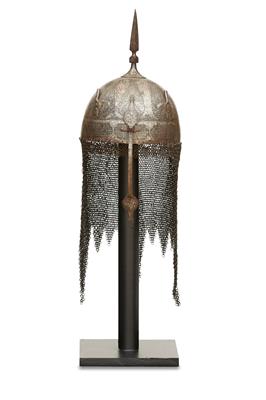

Download media
Object number07153
TitleKulah khud
DescriptionThis splendid steel helmet is known as a kulah khud. It was made in Persia in the 19th century. Helmets like these were used for combat over several centuries, but latterly were more likely to be used in military displays.
The Persian Empire goes back as far as the 6th century BC. It ruled over nations in parts of North Africa and in what we now call the Middle East. While the Empire’s lands changed as a result of wars and as different rulers came to power, the power at its heart remained in the area now called Iran.
The distinctive, bowl-shape of this helmet is very typical of kulah khud. There are two holders on either side for holding feathers from birds such as the egret – together with the quadrangular spike on top, it would have made a fearsome sight. The nose guard has delicate leaf-shaped ends; it can move up and down to provide protection only when needed. Our helmet has a chainmail aventail, which was used to protect the wearer’s neck and shoulders, making for a better, if heavier, armour.
The decorations on kulah khud reflected where and when they were made. Our helmet is covered with inscribed patterns and images of people, leaves, animals and birds. These are similar in design to illustrations found on other Persian objects and in manuscripts.
Production placeIran
Object nameHelmet (casque) "tope"